
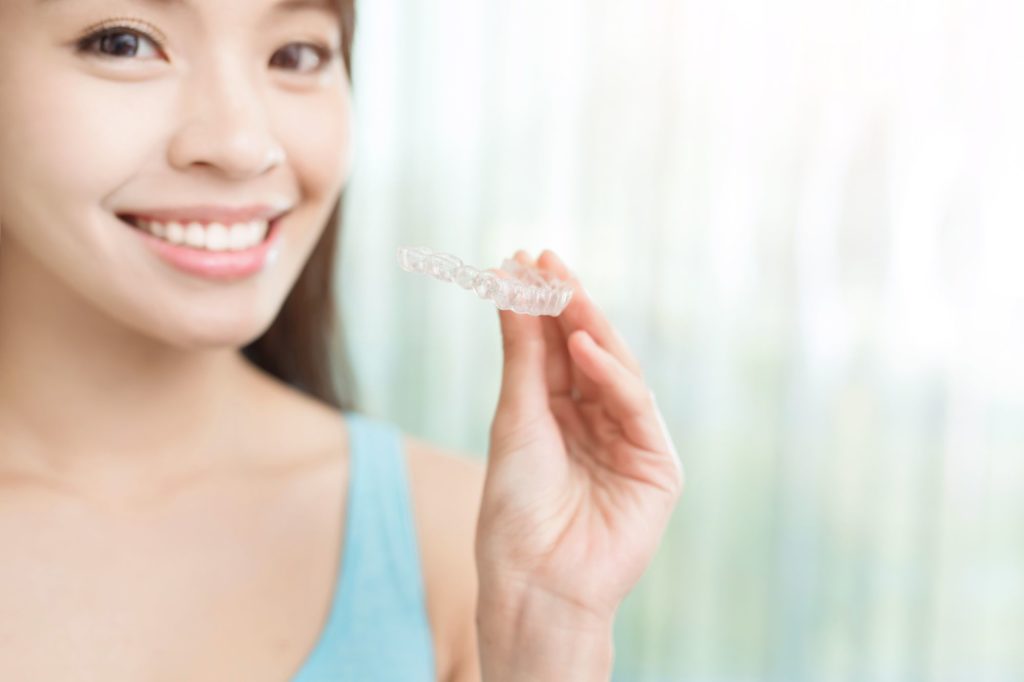
Clear aligners for teens are removable, custom-made plastic trays that gradually straighten teeth without brackets or wires. Each tray shifts teeth slightly, and teens swap to the next set every one to two weeks. Worn 20 to 22 hours a day, they offer a nearly invisible option for growing smiles.
Teen versions differ from adult aligners in a few ways. Many include small blue compliance indicators that fade with wear, so parents and Dr. Lewis can see whether trays are actually going in each day.
Teen aligners also leave room for adult teeth that haven’t fully come in yet. That flexibility matters a lot between ages 12 and 16, when second molars and canines are still settling into place.
The trays are smooth, thin, and BPA-free. Your teen takes them out to eat, brush, and floss, then pops them right back in.

How Clear Aligner Treatment Works Step by Step
Clear aligner treatment starts with a free consultation and exam, followed by a digital scan that builds a 3D plan. A custom series of trays is then made for your teen, who wears each set for one to two weeks. Progress visits happen every six to ten weeks, and retainers hold the finished smile in place.
Here’s what each stage looks like at KBL Orthodontics:
- Free consult and exam. Dr. Katie B. Lewis reviews your teen’s bite, takes digital X-rays, and confirms whether aligners can correct the issue. She’ll also talk through timing and wear expectations.
- Digital scan and 3D plan. A quick scan replaces the goopy impressions of years past. Your teen can often see a digital projection of the final smile before treatment even begins.
- Aligner delivery. Once the custom series arrives, we walk your teen through wear time, cleaning, and storage. Small tooth-colored attachments may be bonded to a few teeth to help the trays grip and guide trickier movements.
- Progress checks. We see most teens every six to ten weeks to confirm teeth are tracking with the plan and hand off the next batch of trays. These visits are short and low-key.
- Retainers. After the last aligner, retainers keep everything where Dr. Lewis moved it. Teeth drift throughout life, so retainer wear is part of the deal.
Our team keeps every step predictable, because a stress-free and rewarding experience makes teens far more likely to stick with the plan.
Benefits of Clear Aligners for Teenagers
Teens tend to care about two things: how treatment looks and how much it interrupts their life. Clear aligners score well on both.
Why Do Teens Choose Clear Aligners Over Visible Hardware?
Appearance is usually the very first question a teenager asks, and aligners answer it fast, since the thin trays hug the teeth closely and catch light much the way natural enamel does. Knowing the trays come out for meals and for the activities that matter most to them also makes the whole idea of straightening teeth feel far less disruptive.
- Nearly invisible. School photos, homecoming pictures, and group selfies look the same as always. Most classmates never notice the trays.
- Removable for the things teens love. Trays come out for lunch, slide out before a game, and come out again for trumpet practice. Athletes can wear a mouthguard, and band kids don’t have to relearn their embouchure around brackets.
- A preview of the finish line. Seeing the projected smile on screen gives teens real motivation to keep the trays in for the full wear window.
How Do Clear Aligners Fit Into a Busy Teen Schedule?
Between practices, rehearsals, part-time jobs, and homework, most families want treatment that adds as few extra stops to the calendar as possible. Aligners tend to be lighter on upkeep, both at home and in the chair.
- Easier brushing and flossing. No threading floss around wires. Your teen brushes normally, which supports healthier gums during treatment.
- Fewer food restrictions. Popcorn, corn on the cob, and caramel are back on the table, as long as trays come out first and teeth get brushed before they go back in.
- Fewer emergency visits. With no brackets to pop off or wires to poke, unexpected trips to our office are less common than with fixed braces.
Clear Aligners vs. Braces for Teens: A Side-by-Side Comparison
Neither option is automatically better. The right choice depends on your teen’s bite, age, and habits.
| Factor | Clear Aligners | Modern Metal or Clear Braces |
|---|---|---|
| Appearance | Nearly invisible trays | Metal brackets, or translucent clear braces and champagne wires for a lower-profile look |
| Removability | Removed for meals, sports, and brushing | Fixed in place until treatment ends |
| Hygiene | Brush and floss normally | Requires extra technique around wires and brackets |
| Visit frequency | Typically every 6 to 10 weeks | Typically every 4 to 8 weeks for adjustments |
| Case complexity | Great for mild to moderate crowding, spacing, and many bite issues | Handles severe rotations, complex bites, and growth-related corrections |
| Depends on teen effort | Yes, 20 to 22 hours of daily wear | No, they work around the clock |
That last row is the honest deciding factor for many families. Braces don’t ask a 14-year-old to make good decisions at lunch. Aligners do.
When teens wear their trays as directed, treatment time is often comparable to braces. When trays sit in a backpack, treatment stretches out.
Teens who want something discreet but would rather not manage removable trays usually do well with clear braces made from translucent ceramic that resists staining. Dr. Lewis will lay out both paths so you can compare them side by side.
Is Your Teen a Good Candidate for Clear Aligners?
Most teens with the majority of their permanent teeth erupted and mild to moderate crowding, spacing, or bite concerns are strong candidates for clear aligners. Wear time is the biggest variable, since trays only work while they’re in.
Good signs your teen is ready:
- Most or all permanent teeth have come in
- Mild to moderate crowding, gaps, or rotation
- Solid brushing habits and no untreated cavities
- Enough responsibility to keep trays in a case, not a napkin
- Genuine buy-in, because a teen who wants aligners wears aligners
When braces may be the better call:
- Significant bite or jaw growth corrections that need added appliances
- Severe rotations or teeth needing large movements
- Younger patients whose teeth and jaws are still developing
- A schedule so packed that daily tray tracking isn’t realistic
It also helps to have an honest conversation at home before anything is ordered, because the teens who do best with aligners are usually the ones who decided they wanted them, rather than the ones who were signed up for them by a parent.
The only way to know for sure is an exam with records. According to the American Association of Orthodontists, children should have their first orthodontic evaluation no later than age seven, which often means a teen already has a growth history on file before aligners are ever discussed.

Frequently Asked Questions About Teen Clear Aligners
How long does clear aligner treatment take for a teen?
Most teen cases run somewhere between 12 and 24 months, though simple spacing corrections can finish sooner. Timing depends on how much the teeth need to move and how consistently trays are worn. Dr. Lewis gives you a projected timeline at your free consult, based on your teen’s actual scan.
Can teens play sports or play instruments with clear aligners?
Yes, and this is one of the biggest reasons athletes and band students choose aligners. Trays come out for a game so a mouthguard can go in, and wind players don’t have to adjust to brackets against their lips. Just remember to store trays in their case and put them back in right after.
What happens if my teen loses an aligner?
Call our team as soon as you notice it’s missing. Depending on where your teen is in the series, we may have them wear the previous tray, move forward to the next set, or order a replacement. Keeping the last tray you finished is a smart backup habit.
Do clear aligners hurt?
Most teens feel mild tightness or soreness for a day or two after switching to a new tray, which is the feeling of teeth actually moving. That sensation fades quickly, and many teens describe aligners as more comfortable than brackets and wires. Cold water and switching trays at bedtime both help.
Can clear aligners fix an overbite or crossbite in teens?
Often, yes. Aligners can correct many overbite, underbite, and crossbite cases, especially mild to moderate ones, sometimes with the help of small attachments or elastics. Cases driven by jaw position rather than tooth position may call for braces or additional appliances, which Dr. Lewis will explain clearly after reviewing records.
Will my teen need a retainer afterward?
Yes. Teeth shift throughout life, so retainers are what protect the smile you invested in. Dr. Lewis will recommend a retainer type and wear schedule at the end of treatment, and the KBL Orthodontics team keeps checking in to make sure everything is holding steady. Many teens wear retainers full time for a short stretch first, then move to nights only for the long haul.